



Saltless Water Softener Alternative Kitchener: Water Softener vs. Saltless Options
If you live in Kitchener-Waterloo, hard water is a fact of everyday life. With hardness levels that can reach 20–38 GPG in some areas, homeowners often look for ways to reduce scale, protect their plumbing and appliances, and improve their water quality.
But is a traditional water softener the right solution or is a saltless water softener alternative in Kitchener a better fit? The answer depends on what you want your water treatment system to do. In this guide, we’ll compare how both technologies work, what they can do in high-hardness areas, and what to consider before choosing one for your home.
- How Hard Is the Water in Kitchener-Waterloo?
- Traditional Water Softener vs. Saltless Alternative: What’s the Difference?
- How Does a Traditional Water Softener Work?
- How Does a Saltless Water Softener Alternative Work?
- Saltless Water Softener Alternative Kitchener: Can It Handle KW Hard Water?
- Water Softener vs. Saltless Alternative: Comparing the Benefits
- Saltless vs. Traditional Softener: What About Maintenance?
- Which System Is Better for Your KW Home?
- What About the Cost of a Saltless Water Softener Alternative?
- Crystal Clear’s Saltless Water Softener Alternatives
- Get Your KW Water Tested Before Choosing a System
- Saltless Water Softener Alternative Kitchener FAQs
Not sure which option is right for your home? Contact Crystal Clear Water Centres for expert advice and a personalized water treatment recommendation.
- Traditional water softeners remove hardness. They use ion exchange to remove calcium and magnesium from your water.
- Saltless alternatives work differently. TAC technology conditions hardness minerals to help reduce scale formation without removing the minerals.
- KW homes can have very hard water. Understanding your home's actual hardness level is important when choosing a treatment system.
- The right choice depends on your goals. Consider whether you want true water softening, scale protection, or a salt-free approach.
1. How Hard Is the Water in Kitchener-Waterloo?
Kitchener-Waterloo is known for hard water, but the exact hardness level can vary depending on where you live and your home’s water supply. For this article, we’ll use 20–38 grains per gallon (GPG) as the general range for understanding the high-hardness conditions some KW homeowners experience.
KW Homes Can Have Water Hardness of 20–38 GPG
Grains per gallon (GPG) is a measurement used to describe the amount of dissolved hardness minerals, primarily calcium and magnesium, in water. The higher the GPG, the harder the water.
Local water hardness maps show that Kitchener and Waterloo include areas with hardness levels ranging through the 20s and into the 30s GPG. However, hardness can vary from one neighbourhood and property to another, so a water test provides the most useful information about your home’s actual water.
Water Hardness Scale
Why High Hardness Matters
When hard water is heated or allowed to dry on surfaces, calcium and magnesium can leave behind mineral deposits. Over time, you may notice:
- White scale around faucets, showerheads, and fixtures.
- Spots or cloudy residue on glassware and dishes.
- Mineral buildup inside water-using appliances.
- More noticeable scale when hard water is heated in water heaters and other appliances.
- Greater use of soap or detergent to achieve the desired results.
- Dry-feeling skin or hair for some people.
Understanding the level of hard water in Kitchener or hard water in Waterloo is an important first step when deciding whether a traditional water softener or a saltless alternative makes sense for your home.
2. Traditional Water Softener vs. Saltless Alternative: What’s the Difference?
Traditional water softeners and saltless alternatives both address problems associated with hard water, but they work in fundamentally different ways. The table below provides a quick comparison of the technologies, maintenance requirements, and results you can expect from each approach.
| Feature | Traditional Water Softener | Saltless Alternative |
|---|---|---|
| Primary technology | Ion exchange | Template Assisted Crystallization (TAC) |
| Removes calcium & magnesium? | Yes | No |
| Reduces scale formation? | Yes | Yes |
| Uses salt? | Yes | No |
| Regeneration required? | Yes | No |
| Wastewater from regeneration? | Yes | No |
| Electricity required? | Typically | No |
| Provides conventionally “soft” water? | Yes | No |
| Main goal | Soften water | Condition water / control scale |
One important distinction: “Saltless water softener” is a common term used when people search for alternatives to traditional water softeners. Technically, however, a TAC system is a water conditioner rather than a conventional water softener. It does not remove calcium and magnesium from the water. Instead, it conditions these hardness minerals to help reduce their tendency to form scale.
3. How Does a Traditional Water Softener Work?
A traditional water softener uses ion exchange to remove the calcium and magnesium responsible for water hardness. This is different from a saltless system, which conditions hardness minerals rather than removing them.
Ion Exchange Removes Hardness Minerals
A traditional water softener uses a process called ion exchange to remove calcium and magnesium from hard water.
- Hard water enters the softener. Water flows into a tank containing specially designed resin beads.
- The resin attracts calcium and magnesium. These hardness minerals attach to the resin as the water passes through the tank.
- Sodium ions are exchanged. The resin releases sodium ions in exchange for the calcium and magnesium.
- Treated water leaves the tank. The water now has greatly reduced levels of calcium and magnesium hardness minerals.
- The resin periodically regenerates. A salt solution flushes the accumulated hardness minerals from the resin so it can continue treating water.
What Happens at 20–38 GPG?
At higher hardness levels, the softener has more calcium and magnesium to remove. This makes system sizing, resin capacity, regeneration settings, and household water usage important considerations when selecting a softener for a KW home.
Crystal Clear Water Centres offers conventional water softeners in different capacities and configurations to accommodate varying household needs and efficiency requirements.
What Are the Advantages of a Traditional Softener?
- It actually removes hardness minerals from the water.
- It produces conventionally softened water throughout the home.
- It can reduce scale formation by removing the minerals that create it.
- It can provide the characteristic softer-water feel many homeowners prefer.
- Ion exchange is a proven technology for treating very hard water.
What Are the Trade-Offs?
Traditional softeners also involve some additional equipment and ongoing requirements:
- They require salt for the regeneration process.
- They require periodic regeneration based on water usage and system settings.
- Regeneration uses water and produces wastewater.
- The system has more components that require maintenance.
- A conventional setup requires space for the softener and salt tank.
4. How Does a Saltless Water Softener Alternative Work?
A saltless water softener alternative uses a different approach to hard water than a traditional ion-exchange softener. Crystal Clear’s saltless systems use Template Assisted Crystallization (TAC) technology, which is designed to help control scale without removing the calcium and magnesium from the water.
How Template Assisted Crystallization (TAC) Works
TAC technology changes how hardness minerals behave without removing them from the water.
Does a Saltless System Remove Hardness?
No. A TAC system does not remove calcium and magnesium from water in the way an ion-exchange softener does. Instead, the goal is to reduce the minerals’ tendency to form hard scale.
What Happens at 20–38 GPG?
Homeowners dealing with high-hardness water should not assume that “saltless” means the hardness disappears. A saltless system is designed to address the effects of hardness, particularly scale formation, rather than remove the hardness minerals themselves.
Because hardness levels can vary from one property to another, testing your water before choosing a system can help determine which approach is appropriate for your home.
5. Saltless Water Softener Alternative Kitchener: Can It Handle KW Hard Water?
If you are looking for a saltless water softener alternative in Kitchener, one of the most important questions is whether the technology is appropriate for the area’s relatively high water hardness. With some KW homes experiencing hardness in the 20–38 GPG range, understanding what a saltless system actually does is important before making a decision.
Start With Your Water Hardness
Water hardness can vary between neighbourhoods and individual properties, so a water test is a useful first step. Knowing your home’s actual hardness level helps you evaluate your options based on your water conditions rather than relying on a general regional number.
Scale Control Is Not the Same as Softening
The distinction between these two goals is particularly important:
- Traditional softening removes calcium and magnesium from the water through ion exchange.
- TAC technology does not remove these minerals. Instead, it is designed to reduce their tendency to form hard scale on plumbing, fixtures, and other surfaces.
This means a saltless system should not be described as softening 30+ GPG water. The hardness minerals remain in the water.
When Might TAC Be a Good Fit?
A saltless alternative can be attractive to Kitchener homeowners whose primary goal is scale protection without salt or regeneration. It may also appeal to you if you prefer a simpler approach without the salt handling and regeneration process associated with conventional softeners.
Ultimately, the right choice depends on what you want from your water treatment system. If your priority is removing hardness, a traditional softener addresses that goal. If your priority is controlling scale without removing hardness, TAC technology offers a different approach.
6. Water Softener vs. Saltless Alternative: Comparing the Benefits
There is no single solution that meets everyone’s priorities. A traditional water softener and a saltless alternative address hard water in different ways, so the best fit depends on what you want your system to accomplish. Use the comparison below to see how each approach aligns with common homeowner priorities.
Traditional Water Softener
Ion exchange is the appropriate technology when you specifically want to remove calcium and magnesium from your water. A traditional softener reduces the actual hardness of the treated water.
A traditional softener can reduce scale by removing the calcium and magnesium that contribute to mineral buildup.
A traditional softener provides conventionally softened water, which can have the characteristic softer-water feel many homeowners expect.
Saltless Alternative
TAC technology can be considered when your primary goal is scale control. Rather than removing hardness minerals, TAC changes how they behave so they are less likely to form hard scale.
- You do not need to purchase or add salt bags.
- The system does not require a traditional brine tank.
- The system does not require regeneration cycles.
- There is no regeneration wastewater.
A TAC system can be an option for homeowners who want to address scale without using salt or operating a conventional regeneration process. It should not, however, be expected to produce exactly the same type of softened water as an ion-exchange system.
Health Considerations: Saltless vs. Traditional Water Softeners
There can be a health-related consideration when comparing saltless systems with traditional sodium-based water softeners. Traditional ion-exchange softeners can add sodium to the treated water, with the amount depending partly on the hardness of the incoming water. Health Canada recommends that people who need to restrict sodium consider bypassing softened water for drinking and cooking.
A saltless TAC system does not add sodium through the softening process because it does not use ion exchange to remove hardness. However, it should not be described as providing a specific health benefit or as making drinking water healthier. Its primary purpose is to reduce scale while leaving the calcium and magnesium in the water.
7. Saltless vs. Traditional Softener: What About Maintenance?
Maintenance is another practical consideration when comparing water treatment options. A traditional softener has ongoing requirements associated with salt and regeneration, while a saltless TAC system is designed around a simpler operating process.
The comparison below focuses on what homeowners can expect to manage with each approach.
Traditional Water Softener
A traditional softener requires some ongoing attention to keep the system operating properly.
- You need to add salt periodically as the salt supply is used during regeneration.
- You need to monitor the salt level to make sure the system does not run out.
- The system performs regeneration cycles to restore the resin's ability to remove hardness minerals.
- The system may require periodic servicing to maintain its components and performance.
- The system includes components such as the resin bed and control valve that support the softening and regeneration processes.
Saltless Alternative
Crystal Clear's saltless systems are designed to operate without the ongoing salt and regeneration requirements of a traditional softener.
- The system requires no salt, so there are no salt bags to purchase or replenish.
- The system requires no electricity for its TAC scale-control process.
- The system produces no regeneration wastewater because it does not use a traditional regeneration cycle.
- The system has no moving parts in the TAC scale-control process.
8. Which System Is Better for Your KW Home?
Choosing between a traditional water softener and a saltless water softener alternative comes down to what you want your water treatment system to accomplish. There is no single option that is right for every KW home.
Choose This Path If You Want to Remove Hardness
Consider This Path If Your Priority Is Scale Control
9. What About the Cost of a Saltless Water Softener Alternative?
When comparing a traditional water softener with a saltless water softener alternative, the purchase price is only part of the equation. The ongoing costs of operating and maintaining the system can also affect the total cost of ownership over time.
Traditional Water Softener
A traditional softener typically involves several ongoing costs beyond the initial equipment and installation.
- Equipment: The initial cost depends on the size, capacity and features of the softener.
- Installation: Professional installation adds to the upfront investment.
- Salt: You need to purchase and replenish salt on an ongoing basis.
- Regeneration: Regeneration uses water, which contributes to the system’s operating costs.
- Maintenance and service: The softener may require periodic maintenance, servicing or replacement of components over its lifespan.
Overall cost profile: $$$
Saltless Water Softener Alternative
A saltless system has a different cost structure because it does not require salt or regeneration.
- Equipment: The initial system cost depends on the technology and configuration selected.
- Installation: Professional installation is an additional upfront cost.
- Media replacement or service: Depending on the system, the treatment media or other components may eventually require replacement or servicing.
- No salt purchases: There is no ongoing need to buy and replenish bags of softening salt.
- No regeneration wastewater: The system does not use water for regeneration cycles.
Overall cost profile: $$$$
Look Beyond the Initial Price
A saltless system may have a different upfront cost than a traditional softener, but the more useful comparison is what each system costs to own and operate over time. Consider the equipment, installation, consumables, water use and maintenance requirements before making your decision.
10. Crystal Clear's Saltless Water Softener Alternatives
If you have decided that scale control without salt and regeneration is the approach you want to explore, Crystal Clear Water Centres offers two saltless water treatment options. Both use Template Assisted Crystallization (TAC) technology rather than conventional ion-exchange softening.
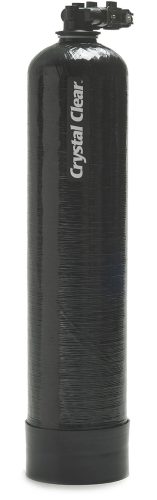
Crystal Scale Stop
Crystal Scale Stop is designed to reduce the formation of hard scale while leaving the calcium and magnesium minerals in the water.
Its TAC media changes how these minerals behave, making them less likely to form hard scale on plumbing and fixtures.
The system is designed with a simple operating approach:
- It uses TAC technology for scale protection.
- It does not require salt.
- It does not require electricity for regeneration.
- It does not produce regeneration wastewater.
- It has no moving parts.
Crystal Scale Stop Plus
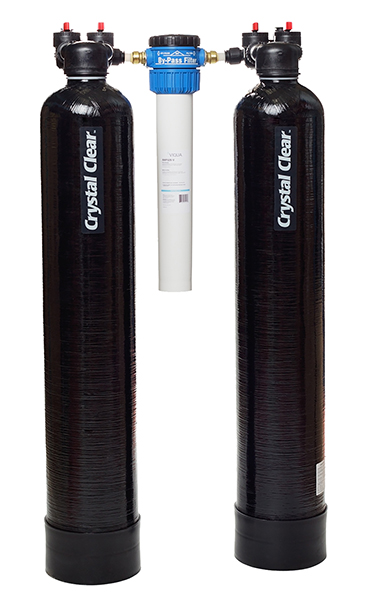
Crystal Scale Stop Plus combines TAC scale protection with additional whole-home filtration. Crystal Clear describes the system as combining Calgon carbon filtration, sediment filtration and TAC media.
The additional treatment is designed to provide:
- Sediment filtration to help reduce sediment and particulate matter.
- Carbon filtration to help reduce chlorine and chloramine.
TAC scale protection to help reduce hard scale formation. - Whole-home treatment so treated water is available throughout the home.
If you are comparing saltless water softener alternatives for your Kitchener-Waterloo home, you can explore the two systems and their features in more detail.
Explore Your Saltless Water Treatment Options
11. Get Your KW Water Tested Before Choosing a System
Water hardness can vary from one property to another, so knowing what is actually in your water is an important first step. A water test can help you understand your home's hardness level and make a more informed decision between conventional softening and saltless scale protection.
12. Saltless Water Softener Alternative Kitchener FAQs
Here are answers to some of the most common questions KW homeowners have when comparing saltless and traditional water treatment systems.
What is a saltless water softener alternative? +
Does a saltless water softener remove calcium from water? +
Is a saltless water softener effective with hard Kitchener water? +
What is the difference between a water softener and a saltless water conditioner? +
Does a saltless system prevent scale? +
Does a saltless water softener use salt or wastewater? +
Is a saltless water softener better than a traditional softener? +
How do I know which water treatment system is right for my Kitchener home? +

Find the Right Water Treatment for Your KW Home
Hard water can affect every part of your home, but the right treatment depends on your water and your priorities. Whether you are considering a traditional water softener or a saltless water softener alternative in Kitchener, start with a water test and get advice based on your home’s actual conditions.
Ready to explore your options? Contact Crystal Clear Water Centres to get your water tested and take the next step toward choosing the right water treatment system for your home.
I had a great experience with Crystal Clear Water. Their customer service is truly top notch. Dennis went above and beyond to help me. He patiently walked me through all their products and services, ensuring I understood everything and found exactly what I needed. He also checked in afterward to make sure everything was up to my expectations, which I really appreciated...Since having the softener and RO system installed, the difference in water quality is like night and day. They’re working great. I highly recommend Crystal Clear Water if you are looking for reliable service and a company that stands behind what they offer.
My family and I recently purchased both a water softener and a reverse osmosis (RO) system from Crystal Clear Water Centres, and we couldn’t be happier! From the initial consultation to installation, the team was knowledgeable and attentive. The products themselves are great quality — our water has never tasted better! The team made sure we understood how everything worked and followed up to ensure we were satisfied. It’s clear that they genuinely care about customer satisfaction and stand behind what they sell. We highly recommend Crystal Clear for anyone looking for reliable water treatment solutions!