



Hard Water Kitchener: What's Actually In Your Tap Water?
If you live in Kitchener-Waterloo, you may have noticed white spots on your glasses, buildup around your faucets, or that your skin and hair never seem to feel quite the same after a shower. These are common signs of hard water and they have a lot to do with the natural geology beneath our region.
Kitchener-Waterloo has some of the hardest water in Ontario, with local hardness levels typically ranging from 20 to 38 grains per gallon (GPG). But what does that actually mean for the water coming from your tap? What minerals are responsible, is hard water safe to drink, and how does municipal water compare with water from a private well?
In this guide, we’ll take a closer look at what’s actually in Kitchener-Waterloo water, how hard water can affect your home and everyday life, and what you can do if you’re experiencing problems with your water.
- What Does “Hard Water” Actually Mean?
- How Hard Is the Water in Kitchener-Waterloo?
- What’s Actually In Kitchener-Waterloo Tap Water?
- Is Hard Water Safe to Drink?
- What Does Hard Water Do to Your Home?
- What Does Hard Water Do to Your Skin and Hair?
- Why Your Neighbour’s Water Treatment System May Not Work for You
- How Do You Know How Hard Your Water Is?
- What Actually Removes Hardness From Water?
- Do You Need a Water Softener, an RO System, or Both?
- The Environmental Side of Water Softening
- Frequently Asked Questions About Hard Water in Kitchener-Waterloo
- The Bottom Line: What’s Actually In Your Kitchener-Waterloo Water?
- What Should You Do Next?
Not sure what’s in your water or which treatment is right for your home? Contact Crystal Clear Water Centres for expert advice and guidance on the best solution for your water.
Key Takeaways
- Kitchener-Waterloo has naturally very hard water, with local hardness levels commonly ranging from approximately 20–38 GPG.
- Hard water is primarily a mineral issue, caused by naturally occurring calcium and magnesium dissolved in the water.
- Hard water does not automatically mean unsafe water. Municipal water is treated and monitored, but hardness can still affect how water behaves throughout your home.
- Hard water can contribute to scale, spots, appliance buildup, soap residue and changes in how your skin, hair and laundry feel.
- Municipal and private well water can have very different treatment needs, so the right solution depends on your home’s water source and chemistry.
- A water softener, reverse osmosis system and whole-home filtration system serve different purposes. Some homes may benefit from more than one type of treatment.
- Private well owners should test their water before choosing a treatment system, particularly when concerns such as iron, sediment or bacteria may be present.
- The best water-treatment system is based on your home’s actual needs, rather than simply choosing the same system as a neighbour.
1. What Does “Hard Water” Actually Mean?
Hard water is water that contains a higher concentration of naturally occurring minerals, primarily calcium and magnesium. These minerals are picked up as water moves through soil and rock, and they are especially common in groundwater. The higher the concentration of these minerals, the harder the water is.
What Makes Water Hard?
Here are the key terms to understand:
- Calcium:
Calcium is a naturally occurring mineral and one of the main contributors to water hardness. It is responsible for much of the scale and mineral buildup associated with hard water. - Magnesium :
Magnesium is another naturally occurring mineral that contributes to water hardness and can also leave mineral deposits. - Dissolved Minerals:
Dissolved minerals are substances that have dissolved into the water as it travels through the ground, including calcium, magnesium and other naturally occurring compounds. - Grains per gallon (GPG):
Grains per gallon (GPG) is a common measurement used by water-treatment professionals to determine how hard water is. The higher the GPG, the harder the water. - Parts per million (PPM):
Parts per million (PPM) is another way of measuring water hardness and other substances dissolved in water. For hardness, approximately 17.1 PPM is equivalent to 1 GPG.
How Is Water Hardness Classified?
Water hardness is generally classified according to the concentration of dissolved calcium and magnesium:
Water Hardness Scale
Kitchener-Waterloo water is well beyond the “very hard” category in many areas, with local hardness levels commonly reaching 20–38 GPG. That means hard water isn’t an unusual occurrence here; it is a normal part of the region’s water chemistry.
2. How Hard Is the Water in Kitchener-Waterloo?
If you live in Kitchener-Waterloo, hard water is more than a minor inconvenience. Water hardness varies throughout the region, but local levels can range from approximately 20 to 38 grains per gallon (GPG). That includes Kitchener, Waterloo, Cambridge and surrounding Waterloo Region communities. The exact hardness can vary from one neighbourhood to another because homes may receive water from different wells or water sources. The Region of Waterloo confirms that hardness differs throughout the region and provides resources to help residents find the hardness for their area.
Why Are Local Hardness Levels So High?
Much of Waterloo Region’s municipal drinking water comes from groundwater wells. As rainwater moves through the soil and underlying rock, it naturally dissolves minerals such as calcium and magnesium. That mineral-rich groundwater is then collected, treated and supplied to homes.
Rain
Soil
Limestone
/ Dolomite
Groundwater
Municipal
Well
Your Home
The Region explains that groundwater is considered hard because of the minerals it picks up as it travels underground.
Kitchener-Waterloo
20–38
GPG
Local water hardness can vary by water source and location, but levels throughout the region can be extremely high.
Very Hard Water Threshold
10.5+
GPG
Water above approximately 10.5 GPG is generally classified as very hard.
Canadian Average
≈10.5
GPG
The approximate Canadian average provides useful context for comparing local hardness levels.
In other words, hard water isn’t an occasional problem here. It’s part of the region’s natural water chemistry.
For local information about water hardness and your area’s water supply, visit the Region of Waterloo’s hard water resources.
Water Storage and Dedicated Faucet
Once the water has passed through the filtration system, the purified water is typically stored in a small storage tank located under the sink. The tank allows clean drinking water to be readily available whenever it is needed.
Most reverse osmosis systems also include a dedicated drinking water faucet installed at the kitchen sink. This separate faucet is used specifically for purified water, making it easy for you to access cleaner, better-tasting water for drinking, cooking, coffee, tea, and ice.
3. What's Actually In Kitchener-Waterloo Tap Water?
The water coming from your Kitchener-Waterloo tap contains more than just H₂O. Understanding what is naturally present in the water helps explain why you may see scale on fixtures, buildup inside appliances or changes in how your water tastes and feels.
Calcium
Calcium is a naturally occurring mineral and one of the primary contributors to water hardness. As groundwater moves through mineral-rich rock, it can dissolve calcium and carry it into the water supply. When hard water is heated, calcium can contribute to scale formation inside water heaters, kettles and other appliances. It can also leave deposits on faucets, showerheads and other fixtures.
Magnesium
Magnesium is another naturally occurring mineral found in groundwater. Like calcium, it contributes to water hardness and can become part of the mineral deposits associated with hard water. Together, calcium and magnesium make up much of the mineral load used to measure water hardness.
Chlorine
Municipal water is disinfected to help protect public health and may contain a small residual amount of chlorine as it travels through the distribution system.
It is important to understand that chlorine and hardness are two different water-quality issues. Hard water does not mean chlorine is present, and removing hardness does not automatically remove chlorine.
Total Dissolved Solids (TDS)
Total dissolved solids (TDS) refers to the combined amount of dissolved substances in water. TDS can include calcium, magnesium, chlorides, sulphates, bicarbonates and other dissolved minerals.
A higher TDS level does not automatically mean water is unsafe. It simply tells you that more dissolved substances are present.
What About Contaminants?
Municipal drinking water is routinely tested and treated to meet drinking-water standards. However, the question for homeowners isn’t simply “Is my water safe?” It’s also, “Is my water the best possible water for my home, appliances, and drinking experience?”
4. Is Hard Water Safe to Drink?
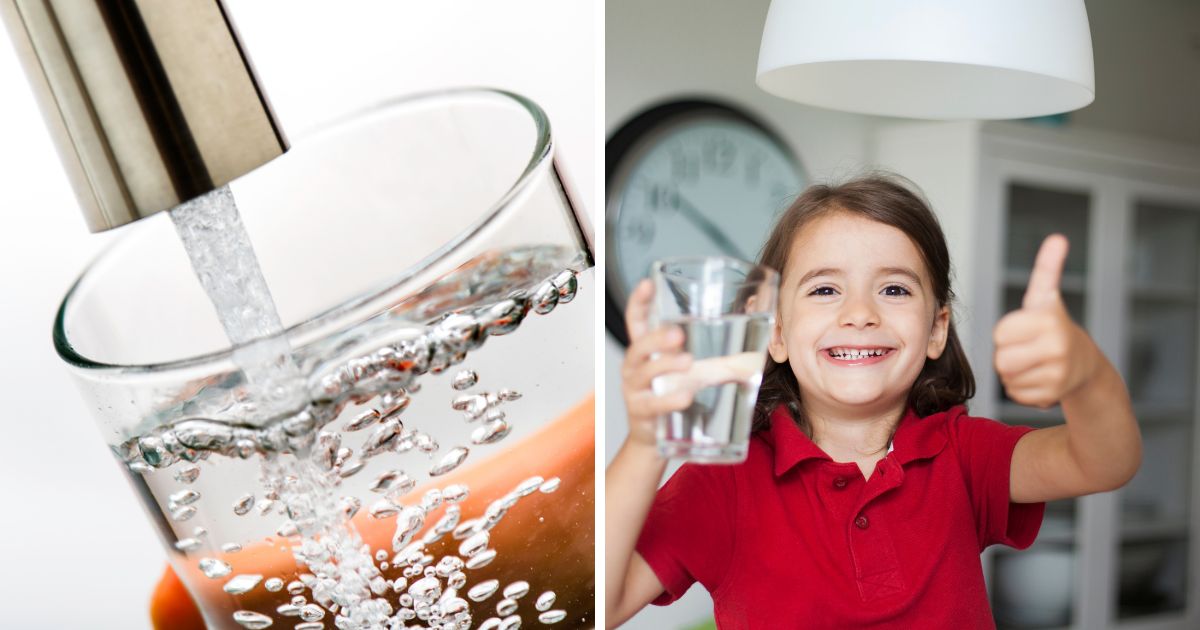
When people hear that Kitchener-Waterloo has very hard water, one of the first questions they ask is, “Is it safe to drink?” The answer requires an important distinction between water hardness and water contamination.
Hard Water vs. Contaminated Water
Hardness is primarily a water-quality and household-use issue, rather than an indication that water is contaminated. Calcium and magnesium are naturally occurring minerals that enter groundwater as it moves through soil and rock. In fact, these minerals are essential nutrients that are naturally present in many drinking-water sources.
For homes connected to the municipal water supply, drinking water is treated and routinely monitored to ensure it meets applicable drinking-water standards.
Therefore, hard water does not automatically mean your tap water is unsafe to drink.
However, private well water is different. Well owners are responsible for testing their own water, and the quality of a private well can vary depending on local conditions. If you rely on a private well, regular water testing is an important part of maintaining a safe water supply.
But “Safe” Doesn’t Mean “Ideal for Every Use”
There is a difference between water being safe to drink and water being ideal for every use in your home.
Hard water can still:
- Leave mineral deposits on faucets, showerheads and glassware.
- Contribute to scale buildup in water heaters and household appliances.
- Affect how soap and detergents perform.
- Influence the taste, odour, or overall drinking experience of your water.
This is where different types of water treatment can serve different purposes. A water softener can address hardness throughout your home, while reverse osmosis (RO) can provide highly filtered drinking and cooking water at a specific tap.
The goal isn’t necessarily to make safe water “safer.” It is to determine whether your home’s water could be better suited to the way you want to use it.
5. What Does Hard Water Do to Your Home?
Hard water doesn’t just leave white spots on your faucets. The calcium and magnesium minerals dissolved in Kitchener-Waterloo water can affect many of the systems and everyday items throughout your home. From your bathroom fixtures and kitchen appliances to your laundry, water heater and plumbing, the effects can add up over time.
Your Bathroom
- White scale can develop around faucets and other fixtures.
- Mineral buildup can collect inside showerheads and restrict water flow.
- Hard water can leave spots and mineral residue on glass shower doors.
- Soap can combine with hard-water minerals and contribute to stubborn soap scum.
- Mineral deposits can make bathroom fixtures more difficult to clean.
Your Kitchen
- Hard water can leave cloudy spots or a film on glassware.
- Mineral deposits can leave spots on dishes after washing.
- Calcium buildup can accumulate inside kettles and other appliances that heat water.
- Mineral deposits can build up inside coffee makers and affect their performance.
- Dishwashers can develop scale and mineral deposits over time.
- Hard-water buildup can contribute to reduced performance in water-using appliances.
Your Laundry
Hard water can change the way soap and laundry detergent interact with water, which can affect how well they rinse away.
- Mineral deposits can remain in fabrics after washing.
- Clothing and towels can feel stiff rather than soft.
- White fabrics can appear dull over time.
- Hard water can make it more difficult to get the results you expect from your laundry products.
Your Plumbing
Hard-water minerals can also accumulate throughout your home's plumbing system, particularly in areas where water flow is restricted or where fixtures regularly come into contact with water.
- Scale can accumulate inside plumbing components and fittings.
- Faucet aerators can collect mineral deposits that restrict water flow.
- Valves can be affected by mineral buildup over time.
- Showerheads can develop scale that affects water flow and spray patterns.
- Pipes and fittings can accumulate mineral deposits over extended periods.
Your Water Heater
Your water heater is one of the places where hard water can have a particularly noticeable impact because heating the water encourages mineral scale to form.
- Scale can accumulate on heating elements and other internal components.
- Mineral buildup can reduce the efficiency of heat transfer.
- Continued use can lead to increasing mineral accumulation inside the system.
- Significant scale buildup can contribute to additional maintenance requirements.
- In severe cases, long-term mineral accumulation may contribute to a shorter useful life for the equipment.
6. What Does Hard Water Do to Your Skin and Hair?
You may notice the effects of hard water most often in the bathroom. When water contains high levels of calcium and magnesium, those minerals can interact with soap, shampoo, and your skin and hair, leaving behind residue that can be difficult to rinse away.
How Hard Water Can Affect Your Skin
Many people notice that their skin feels different after showering or bathing in hard water. While hard water is not generally considered a cause of medical conditions, the combination of minerals and soap can affect how clean and comfortable your skin feels.
Commonly reported effects include:
- Dry-feeling skin:
Hard water can leave mineral and soap residue on the skin, which may contribute to a dry or tight feeling after bathing. - Soap residue:
Calcium and magnesium can react with soap and make it more difficult to rinse away completely. - A film on the skin:
Mineral and soap residue may leave your skin feeling less clean or smooth even after a shower.
How Hard Water Can Affect Your Hair
Your hair can also show signs of repeated exposure to hard water. Mineral deposits can accumulate on the hair’s surface, particularly when shampoo and other products are not rinsed away completely.
You may notice:
- Hair feeling dull or coated:
Mineral residue can make hair feel less soft, shiny or clean. - Difficulty rinsing shampoo:
Hard water can make it more difficult to rinse shampoo and soap residue thoroughly. - Mineral buildup:
Calcium and magnesium can leave deposits on hair over time, potentially affecting how it feels and responds to hair-care products.
If these effects sound familiar, the issue may not be your soap or shampoo; it could be the water you’re using every day.
7. Municipal Water vs. Well Water in Kitchener-Waterloo
Not all Kitchener-Waterloo homes have the same water source. Whether your home is connected to the municipal water supply or relies on a private well can make a significant difference in what’s coming from your taps and which type of water treatment may be appropriate.
Municipal water is treated and monitored, while private well water can have a much more individualized water profile that depends on the conditions around your property.
Municipal Water
Municipal water is supplied through the local water system. Much of Waterloo Region's municipal supply comes from groundwater, which naturally picks up minerals as it moves through the ground.
- Water comes to your home through the municipal water supply.
- Much of the region's municipal water supply relies on groundwater.
- Municipal drinking water is treated and routinely monitored.
- Hardness can still be significant even after municipal treatment.
- Municipal water can contain a residual amount of chlorine from the disinfection process.
Typical Municipal-Water Concerns
- Hardness
- Scale
- Chlorine taste or odour
- Appliance protection
- Drinking-water taste
Private Well Water
Private well water can have a much more individualized water profile because its characteristics depend on the geology, groundwater and conditions surrounding your property.
- Water comes directly from a private groundwater well on the property.
- The mineral content can vary considerably from one property to another.
- Private well water should be tested regularly to identify potential concerns.
- A water treatment system should be selected based on the results of your water testing.
Potential Well-Water Concerns
- Hardness
- Iron
- Manganese
- Sulphur odour
- Sediment
- Turbidity
- Bacteria or coliforms
- Other site-specific contaminants
Why Well Water Should Be Tested
Private well water can vary significantly from one property to another, so assuming that a water softener is the right solution based on hardness alone can leave other water-quality concerns unaddressed.
A well may contain minerals such as iron or manganese, as well as sediment, turbidity, bacteria or other site-specific substances. A water softener is not automatically the complete answer for a private well.
The right treatment depends on what’s actually in your water. Testing your well water can identify potential concerns and provide the information needed to choose an appropriate treatment system.
If you rely on a private well and aren’t sure what is in your water, professional water testing is a good place to start.
8. Why Your Neighbour's Water Treatment System May Not Work for You
When it comes to water treatment, there is no single system that is right for every home. Even two properties in the same Kitchener-Waterloo neighbourhood can have different water characteristics, usage patterns and treatment needs.
That’s why choosing a system based solely on what worked for a neighbour may not give you the results you’re looking for.
What Determines the Right Treatment?
A suitable water treatment system should take several factors into account, including:
- Water hardness:
Higher hardness levels may require different softening capacity and system settings. - Water source:
Municipal water and private well water can have very different treatment requirements. - Household size:
The number of people in your home affects how much water the system needs to treat. - Daily water consumption:
A system needs to be appropriately sized for your household’s actual water usage. - Iron levels:
Iron in well water may require treatment beyond what a standard softener can provide. - Other contaminants:
Sediment, manganese, bacteria and other substances may require specialized treatment. - Desired drinking-water quality:
Whole-home water treatment and drinking-water purification can serve different purposes. - Plumbing configuration:
The way water enters and moves through your home can affect where treatment equipment should be installed.
One Home Can Be Very Different From Another
For example, a home on municipal water with 25 GPG hardness may need a very different treatment approach from a rural home with 35 GPG hardness plus iron and sediment.
The goal isn’t simply to install a water softener. It’s to understand your water, your home and your priorities, then recommend treatment that addresses the issues that actually matter to you.
That’s where professional water-treatment advice can make a difference.
9. How Do You Know How Hard Your Water Is?
If you’re noticing scale, spots, dry-feeling skin or other signs of hard water, you may be wondering just how hard your water actually is. There are a couple of ways to find out, depending on where your water comes from.
Option 1: Check Your Local Water Hardness Information
If your home is connected to the municipal water supply, local municipal and regional resources can provide information about water hardness in your area. This can give you a useful starting point, but remember that hardness can vary between different water sources and neighbourhoods.
Option 2: Test Your Water
For a more accurate picture of your home’s water, professional water testing can identify the specific characteristics of your water. This is particularly important for homes with private wells because well-water quality can vary significantly from one property to another.
What Should a Water Test Look At?
The appropriate testing depends on your water source and your concerns, but a comprehensive assessment may include:
- Hardness to determine the concentration of calcium and magnesium.
- Iron and manganese to identify minerals that can cause staining, odour or other problems.
- pH to determine how acidic or alkaline the water is.
- TDS (total dissolved solids) to measure the overall concentration of dissolved substances.
- Chlorine when assessing municipal water and concerns about taste or odour.
Other relevant contaminants based on your water source and individual circumstances.
Knowing what’s actually in your water is the first step toward choosing treatment that makes sense for your home.
Not sure what’s actually in your water? Crystal Clear Water Centres can help you identify the right treatment approach based on your home’s water.
10. What Actually Removes Hardness From Water?
Once you know that Kitchener-Waterloo has very hard water, the next question is usually: What can you do about it? The answer depends on what you want to improve.
A water softener, reverse osmosis system and whole-home filtration system all treat water differently. Understanding those differences can help you choose an approach based on your home’s specific water concerns rather than assuming one system does everything.
Water Softener
An ion-exchange water softener removes calcium and magnesium from the water, addressing the minerals responsible for hardness and scale.
Best suited for:
- Whole-home hardness can be addressed with a properly sized softener.
- Scale formation on fixtures and appliances can be reduced.
- Appliances that use water can benefit from reduced mineral buildup.
- Water can feel softer on your skin and during bathing.
- Soap and detergents can perform more effectively in softened water.
Reverse Osmosis (RO)
Reverse osmosis is different from a water softener. It is primarily a drinking-water treatment system designed to reduce many dissolved substances from water at a specific point of use.
Best suited for:
- Drinking water can be treated at a dedicated point-of-use tap.
- Cooking water can be treated for greater control over water quality.
- Water taste can be improved depending on the substances being reduced.
- Point-of-use purification can provide highly treated water where you need it most.
Whole-Home Filtration
Whole-home filtration uses different types of filter media or technologies to address specific water-quality concerns. The right filter depends on what is actually present in your water.
Depending on the system, filtration may address:
- Chlorine can be reduced with filtration systems designed for chlorine removal.
- Unwanted tastes can be improved with appropriate filtration media.
- Odours can be addressed with systems designed for the specific cause.
- Sediment can be reduced with appropriately selected sediment filtration.
- Specific contaminants may require specialized filtration or treatment technology.
11. Do You Need a Water Softener, an RO System, or Both?
Choosing the right water treatment system starts with understanding what you want to improve. A water softener, reverse osmosis system, and whole-home filter system each address different concerns, and some homes may benefit from more than one approach. Use the guide below as a starting point, then have your water assessed to determine which solution makes the most sense for your home.
What is your biggest water concern?
Start with the problem you want to solve.
Hard Water & Scale
You are dealing with white scale, spots or appliance buildup throughout your home.
Drinking Water
Your main concern is drinking-water taste or dissolved substances.
Whole-Home + Drinking Water
You have hardness throughout the home and also want higher-quality drinking water.
Private Well Water
Your well water has iron, sediment, bacteria or other concerns.
Not sure which option is right for you?
Your water source and water chemistry can make a significant difference in the right treatment approach. Professional advice can help you avoid choosing a system based on guesswork.
Contact Crystal Clear Water for Advice →12. The Environmental Side of Water Softening
Water softeners can be an effective way to manage hard water, but they also use resources. A responsible approach means considering not only how well a system treats your water, but also how efficiently it operates.
The Region of Waterloo notes that traditional water softeners use both salt and water during their regeneration cycles and that household softeners contribute significant amounts of backwash water. The Region also recommends efficient, properly configured systems, including NSF 44-certified efficient softeners and alternatives such as salt-free technologies where appropriate.
What Can Make a Difference?
Several factors can help reduce unnecessary resource use:
- Salt consumption:
An appropriately selected and configured softener can help avoid using more salt than necessary. - Regeneration water:
Efficient systems can reduce the amount of water used during regeneration. - Proper sizing:
A softener should be sized according to the home’s water hardness and actual water usage rather than simply choosing the largest available system. - Efficient programming:
Regeneration settings should reflect household needs so the system does not regenerate more frequently than necessary. - Avoiding unnecessary regeneration:
A properly configured system can help prevent wasted salt and water from unnecessarily frequent regeneration cycles. - Regular maintenance:
Keeping the system operating properly can help maintain its efficiency and performance over time.
The Right System Matters
Water treatment should be about finding the right balance between performance, household needs and resource use.
The goal isn’t simply to install the biggest softener possible. It’s to install and configure the right system for the home’s actual water use and hardness.
That approach can provide effective hard-water treatment while helping you avoid unnecessary salt, water and operating costs.
13. Frequently Asked Questions About Hard Water in Kitchener-Waterloo
Below, we’ve answered some of the most common questions homeowners ask about local water hardness, its effects and the options available for improving water quality.
Water hardness varies throughout Kitchener, but local levels can range from approximately 20 to 38 grains per gallon (GPG). The exact hardness can differ depending on the water source and location, so the water at one home may not be identical to the water at another home nearby.
Hard water does not automatically mean that tap water is unsafe to drink. Calcium and magnesium, which cause water hardness, are naturally occurring minerals. Municipal drinking water is treated and monitored to meet applicable drinking-water standards. However, water being safe to drink is different from water being ideal for every household use.
Yes. Waterloo, like much of the surrounding region, has naturally hard water. A significant portion of the area's municipal supply comes from groundwater, which picks up calcium and magnesium as it moves through the local geology. Hardness can vary depending on the specific water source and location.
Kitchener's water is naturally hard because much of the municipal supply comes from groundwater. As rainwater moves through soil and mineral-rich rock underground, it dissolves calcium, magnesium and other minerals. These dissolved minerals are then carried into the groundwater supply.
Many people notice that their skin feels dry or tight after bathing in hard water. Calcium and magnesium can interact with soap and leave mineral and soap residue on the skin. This may contribute to a less comfortable or less clean-feeling sensation.
Boiling hard water can cause some calcium minerals to precipitate and form scale, but it does not provide the same type of whole-home treatment as a water softener. Boiling also does not remove all of the minerals responsible for hardness. It is therefore not a practical solution for managing hard water throughout your home.
A conventional drinking-water filter is not equivalent to a whole-home ion-exchange water softener. Some pitcher filters can reduce certain substances, but they are generally designed for point-of-use drinking water rather than treating hardness throughout your plumbing system. If your primary concern is calcium and magnesium hardness, a properly sized water softener is a different type of treatment.
No. A standard ion-exchange water softener is designed primarily to remove calcium and magnesium that cause hardness. Hardness removal and chlorine removal are different treatment processes. If chlorine taste or odour is a concern, a filtration system designed to reduce chlorine may be more appropriate.
Municipal water can still be extremely hard. Being connected to city water does not mean that calcium and magnesium have been removed. In Kitchener-Waterloo, municipal water can have hardness levels well into the very hard category, so a water softener may be appropriate if scale, appliance buildup or other effects of hard water are concerns.
Not necessarily. The hardness of private well water depends on the individual well and the geology surrounding the property. Well water can also contain concerns that are not typically associated with municipal water, such as iron, manganese, sediment or bacteria. Testing your well water is the best way to determine what treatment it actually needs.
A water softener is a whole-home treatment system designed primarily to remove calcium and magnesium that cause hardness. Reverse osmosis (RO) is generally a point-of-use drinking-water treatment that can reduce many dissolved substances. In some homes, a water softener and RO system can work together, with the softener treating household water and RO providing highly treated drinking and cooking water.
If you receive municipal water, local municipal or regional resources can provide information about hardness in your area. For a more specific assessment, professional water testing can determine the characteristics of your home's water. This is particularly important for private wells, where water quality can vary significantly from one property to another.
14. The Bottom Line: What's Actually In Your Kitchener-Waterloo Water?
So, what’s actually in the water coming from your tap? For most Kitchener-Waterloo homes, the answer includes a naturally occurring mix of minerals that can have a noticeable effect on how water behaves throughout your home.
Depending on your water source, you may find:
- Calcium, one of the primary minerals responsible for water hardness and scale.
- Magnesium, which also contributes to overall water hardness.
- Other naturally occurring dissolved minerals, including substances that contribute to total dissolved solids.
- A chlorine residual in municipal water, which remains after the disinfection process.
- Additional substances in private well water, which can vary depending on the property and local groundwater conditions.
The important point isn’t that Kitchener-Waterloo water is “bad.” It’s that our region’s water chemistry is unusually mineral-heavy, and that has real consequences for how water behaves inside your home.
Understanding what’s actually in your water is the first step toward deciding whether you need a water softener, filtration, reverse osmosis, or another treatment approach. The right solution should be based on your home’s water, not simply what worked for someone else.
15. What Should You Do Next?
If you’re noticing scale, spots, appliance buildup, or changes in the taste or feel of your water, you don’t necessarily need to replace everything or install the most complicated system available. A better approach is to understand your home’s water first and then choose treatment based on the problem you’re actually trying to solve.
Identify Your Water Source
Start by determining whether your home receives municipal water or relies on a private well.
Municipal or private well?Find Your Hardness Level
Find out how hard your water actually is rather than relying on assumptions or what you have heard about your neighbourhood.
Don't guess if you can test.Identify the Problem
Consider what you want to improve, whether it is scale, appliances, taste, iron, drinking water or another concern.
What is actually bothering you?Match Treatment to the Problem
Choose a treatment approach based on your water chemistry, household needs and the results you want to achieve.
Treat the cause, not the guess.Get a Better Understanding of Your Home’s Water
Crystal Clear Water Centres can help homeowners in Kitchener-Waterloo understand their water and determine whether a water softener, reverse osmosis system, filtration, or another treatment approach makes sense.
Explore your options and get advice based on your home’s water.

Trusted Experience in Residential Water Treatment
For decades, Crystal Clear Water Centres has helped homeowners improve the quality of their water with dependable residential water treatment solutions. Their experience working with local water conditions allows them to recommend systems that are designed to meet the needs of families throughout the region.
Since 1980, Crystal Clear Water Centres has built a reputation that more than 20,000 customers have come to trust. The company has provided water treatment solutions to multiple generations of families, with more than 60% of its business coming from existing customers and referrals.
This long-standing reputation reflects the company’s commitment to customer service, quality products, and dependable support.
Professional Installation and Personalized Recommendations
Every home has unique water quality concerns, which is why professional guidance is important when choosing a reverse osmosis system. Crystal Clear Water Centres works with you to recommend systems that fit your household size, water conditions, and long-term goals.
You can benefit from several professional services and support options:
- We provide professional installation to ensure reverse osmosis systems operate properly and efficiently.
- We offer personalized system recommendations based on your home’s water quality and household needs.
- We provide maintenance and filter replacement support to help keep systems performing at their best.
- We create customized water treatment solutions for homeowners in Kitchener-Waterloo and surrounding areas.
By providing both expert recommendations and ongoing support, Crystal Clear Water Centres can help you enjoy cleaner, better-tasting drinking water with confidence.
Local Solutions for Kitchener-Waterloo Homeowners
Water quality concerns can vary from one home to another, which is why local experience matters. Crystal Clear Water Centres understands the water treatment needs commonly found in Kitchener-Waterloo homes and can recommend solutions that address those specific conditions.
Whether you are looking for a reverse osmosis system, a water softener, or a complete water filtration setup, Crystal Clear Water Centres offers solutions designed to improve water quality, convenience, and peace of mind.
Contact Crystal Clear Water Centres Today
Cleaner, safer, better-tasting drinking water can make a noticeable difference in your everyday life. If you are ready to improve the quality of your home’s drinking water, contact Crystal Clear Water Centres today to learn more about reverse osmosis systems, water testing, and customized water treatment solutions for your home and family.
I had a great experience with Crystal Clear Water. Their customer service is truly top notch. Dennis went above and beyond to help me. He patiently walked me through all their products and services, ensuring I understood everything and found exactly what I needed. He also checked in afterward to make sure everything was up to my expectations, which I really appreciated...Since having the softener and RO system installed, the difference in water quality is like night and day. They’re working great. I highly recommend Crystal Clear Water if you are looking for reliable service and a company that stands behind what they offer.
My family and I recently purchased both a water softener and a reverse osmosis (RO) system from Crystal Clear Water Centres, and we couldn’t be happier! From the initial consultation to installation, the team was knowledgeable and attentive. The products themselves are great quality — our water has never tasted better! The team made sure we understood how everything worked and followed up to ensure we were satisfied. It’s clear that they genuinely care about customer satisfaction and stand behind what they sell. We highly recommend Crystal Clear for anyone looking for reliable water treatment solutions!